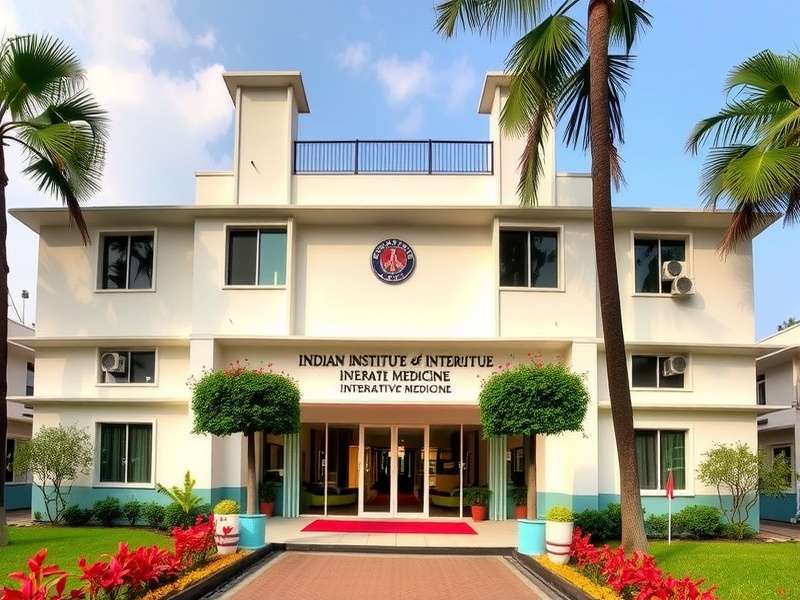
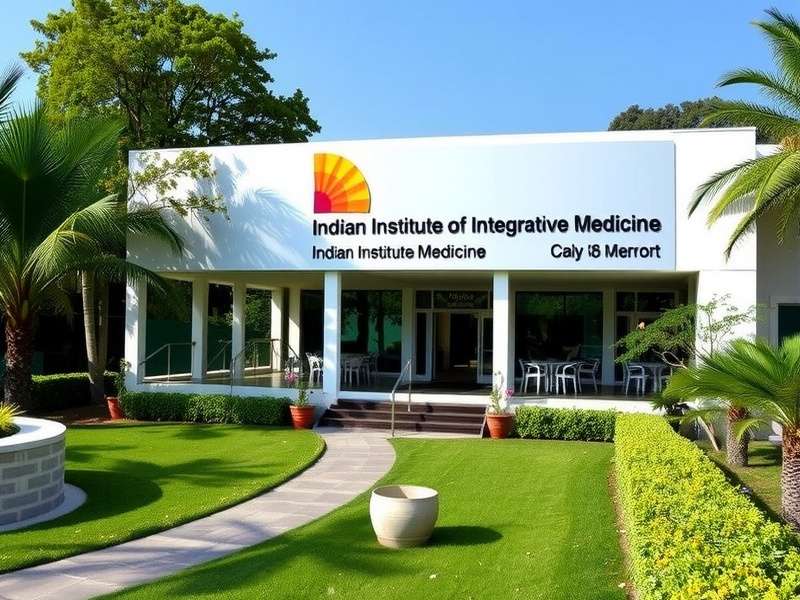
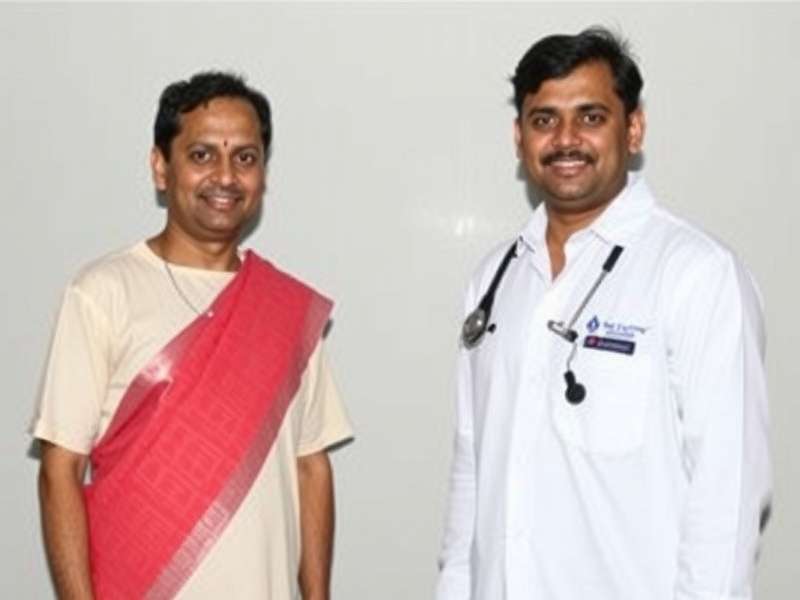
A premier research institution under the Council of Scientific & Industrial Research (CSIR), dedicated to pioneering research in drug discovery, medicinal plant sciences, and integrative health approaches since 1941.
Explore Our ResearchDiscovered novel anti-inflammatory compounds from Himalayan medicinal plants with patent filed in 2023.
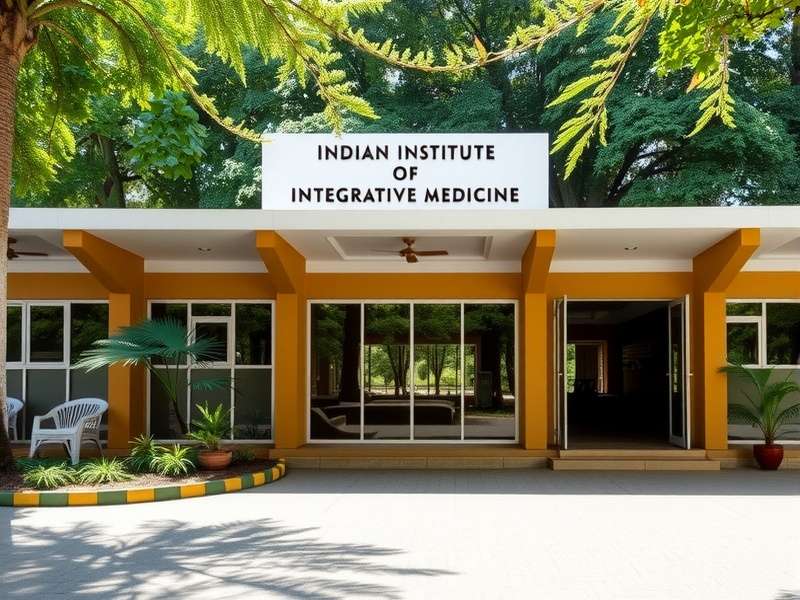
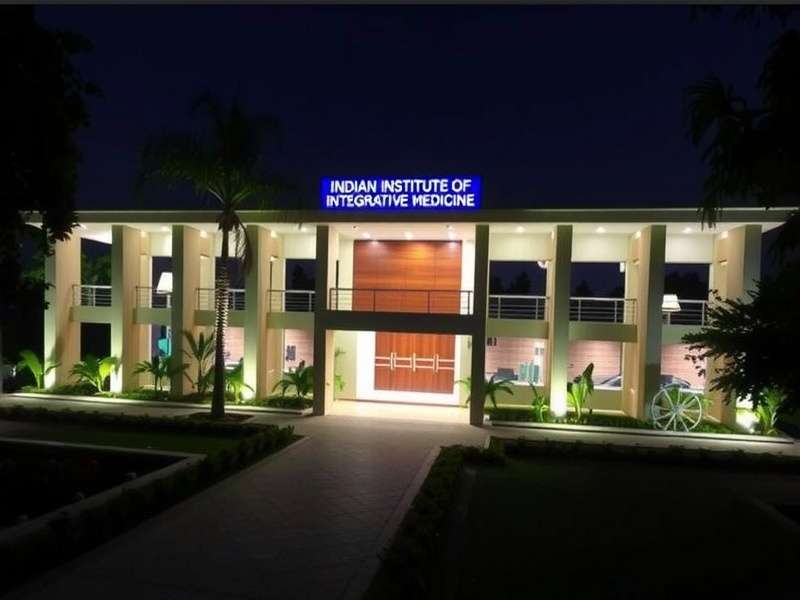
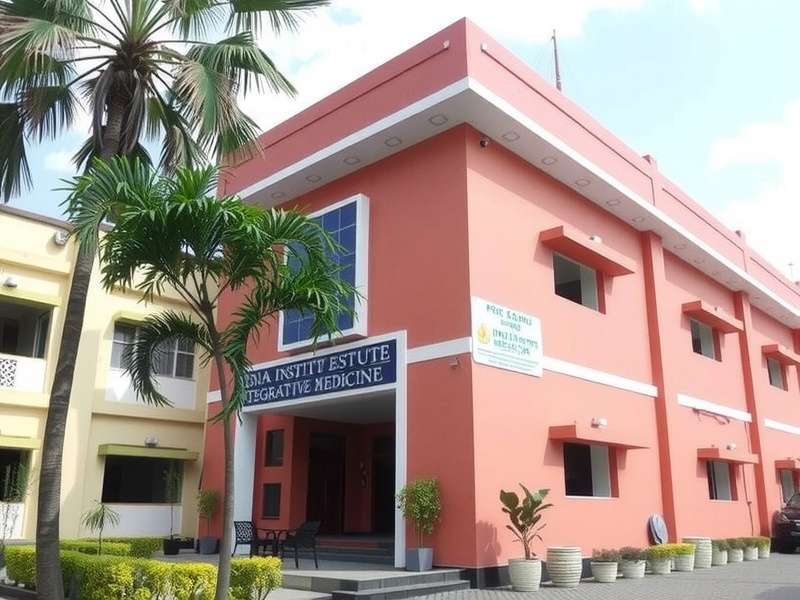
The Indian Institute of Integrative Medicine (IIIM), Jammu, formerly known as the Regional Research Laboratory, is a constituent laboratory of the Council of Scientific & Industrial Research (CSIR), New Delhi. Established in 1941, IIIM has evolved into a premier institute focusing on drug discovery from natural products, especially medicinal plants of the Himalayan region.
To discover and develop novel therapeutic agents from natural resources, with emphasis on medicinal plants, through interdisciplinary research integrating traditional knowledge with modern science.
To become a global leader in integrative medicine research, bridging traditional healing systems with contemporary pharmaceutical sciences for affordable healthcare solutions.
With over 80 years of research excellence, IIIM has contributed significantly to India's pharmaceutical sector, including development of drugs for arthritis, diabetes, and cancer.
Established as the "Drug Research Laboratory" by the Council of Scientific & Industrial Research.
Reorganized as Regional Research Laboratory, Jammu with focus on natural product chemistry.
Pioneered research on anti-arthritic drug development from medicinal plants.
Renamed as Indian Institute of Integrative Medicine to reflect interdisciplinary approach.
Established state-of-the-art animal facility and high-throughput screening laboratory.
Launched collaborative research program with international partners on Himalayan medicinal plants.
Systematic documentation, cultivation, and conservation of medicinal plants from the Himalayan region. Development of agrotechnologies for commercial cultivation of high-value medicinal plants. Phytochemical profiling and standardization of herbal extracts.
Our herbarium houses over 25,000 plant specimens with comprehensive ethnobotanical data. We maintain a living repository of 500+ medicinal plant species in our experimental farm.
Isolation and characterization of bioactive molecules from natural sources. Target-based screening for anti-cancer, anti-inflammatory, anti-diabetic, and neuroprotective agents. Lead optimization and pre-clinical development of drug candidates.
Current projects include development of novel molecules for rheumatoid arthritis, type-2 diabetes, and triple-negative breast cancer with 3 candidates in advanced pre-clinical stages.
Plant tissue culture for conservation of endangered medicinal plants. Metabolic engineering for enhanced production of secondary metabolites. Development of molecular markers for authentication of medicinal plants.
We have established micropropagation protocols for 30+ high-altitude medicinal plants including Picrorhiza kurrooa, Saussurea costus, and Aconitum heterophyllum.
In vitro and in vivo evaluation of pharmacological activities. Safety assessment and toxicological profiling of new chemical entities. Pharmacokinetic and pharmacodynamic studies.
Our facility is equipped with advanced instruments for real-time PCR, flow cytometry, confocal microscopy, and in vivo imaging systems for comprehensive pharmacological evaluation.
Research on natural products for neurodegenerative disorders like Alzheimer's, Parkinson's, and depression. Investigation of mechanisms underlying neuroprotection. Development of novel therapeutic approaches for neurological conditions.
We have identified several plant-derived compounds with significant neuroprotective effects in cellular and animal models of neurodegeneration.
Scientific validation of traditional medicine systems. Development of evidence-based integrative therapies. Clinical research on Ayurvedic formulations and Yoga interventions.
Collaborative studies with Ayurvedic institutions on rheumatoid arthritis, diabetes, and respiratory disorders have demonstrated the efficacy of integrative approaches.
2023: Discovered a novel compound from Picrorhiza kurrooa with potent anti-inflammatory activity (Patent filed: IN 202347012345).
2022: Developed a cost-effective cultivation technology for Trichopus zeylanicus (Energy plant) which increased yield by 40%.
2021: Identified molecular markers for authentication of Withania somnifera (Ashwagandha) chemotypes with validated therapeutic properties.
2020: Completed phase-II clinical trial of a polyherbal formulation for rheumatoid arthritis showing significant improvement over standard care.
State-of-the-art instrumentation including HPLC, GC-MS, LC-MS, NMR (400 MHz & 600 MHz) for isolation and characterization of bioactive compounds.
Advanced facilities for gene cloning, protein expression, real-time PCR, CRISPR/Cas9 gene editing, and next-generation sequencing.
Biosafety level-2 cell culture facility, confocal microscopy, flow cytometry, and high-content screening systems for cellular assays.
AAALAC-accredited animal house with species-specific pathogen-free (SPF) conditions for preclinical pharmacology and toxicology studies.
Journal: Journal of Natural Products | Year: 2023 | Authors: Sharma A, Singh B, Gupta R, et al.
Isolation and characterization of three new withanolides showing significant inhibition of NF-κB pathway in rheumatoid arthritis model.
Journal: Phytochemistry | Year: 2023 | Authors: Verma S, Kumar D, Joshi R, et al.
Comprehensive LC-MS based metabolomics revealed altitude-dependent variation in picrosides content with implications for quality control.
Journal: Plant Biotechnology Journal | Year: 2023 | Authors: Patel M, Singh A, Raina R, et al.
Genetic engineering approach increased bacoside A content by 2.8-fold in transgenic lines, demonstrating potential for enhanced metabolite production.
Journal: Frontiers in Pharmacology | Year: 2022 | Authors: Kumar V, Sharma P, Singh S, et al.
Phase II clinical trial demonstrating significant improvement in DAS-28 score and reduction in inflammatory markers compared to standard therapy.
Journal: Neurotherapeutics | Year: 2022 | Authors: Mehta D, Choudhary N, Kaul S, et al.
Mechanistic study revealing apigenin-mediated clearance of amyloid beta through enhanced autophagy-lysosomal pathway.
IIIM collaborates with leading national and international institutions to advance integrative medicine research and translate discoveries into healthcare solutions.
Indian Institute of Integrative Medicine
Canal Road, Jammu - 180001
Jammu & Kashmir, India
+91-191-2569001 to 2569005
Fax: +91-191-2569333
Emergency: +91-191-2569111